Five Kingdom Classification, Characteristics and Advantages
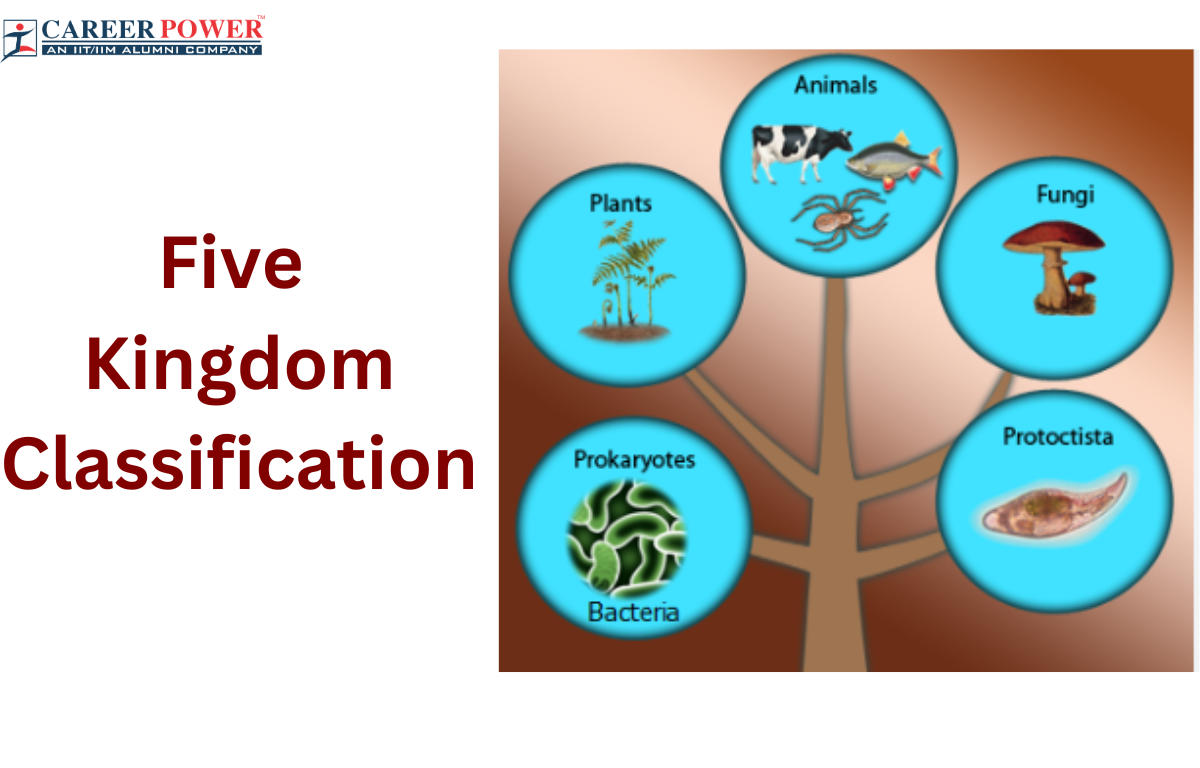
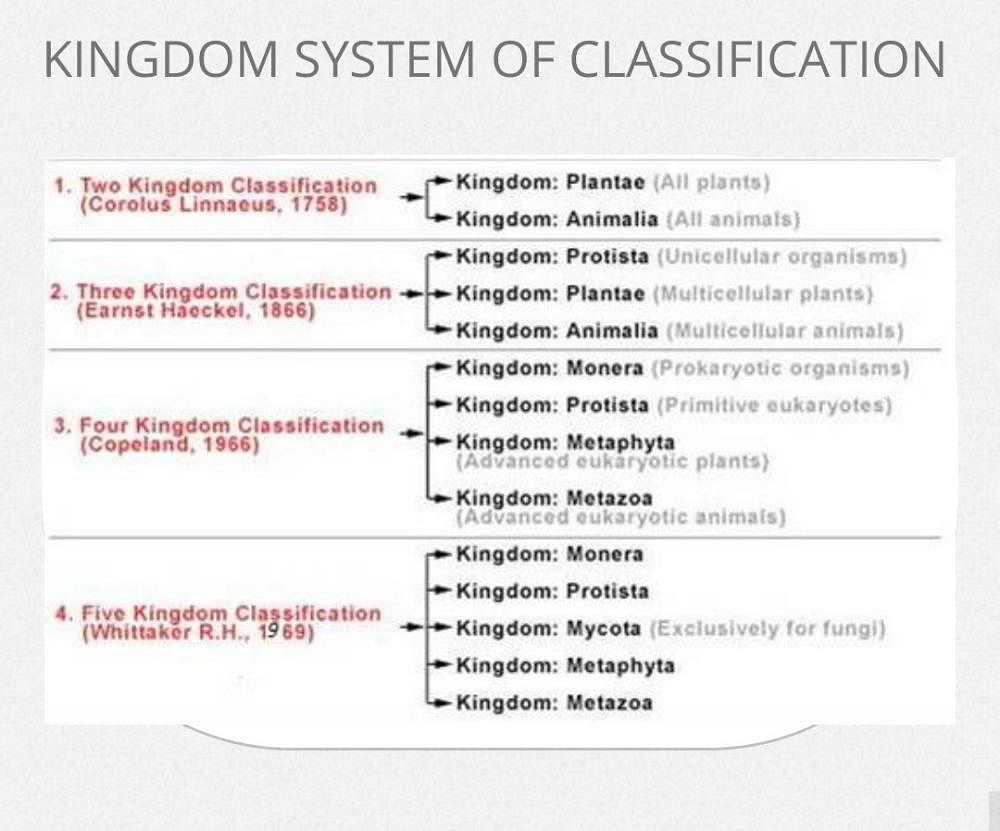
Slide 1. Two Kingdom Classification of organisms was proposed by Carolus Linnaeus in the year 1758. He classified all living things into two kingdoms, they are Animal kingdom and Plant kingdom. He named for animal kingdom as. Regnum Animale(Kingdom Animalia) and plant kingdom as Regnum vegetable ( Kingdom Plantae)
SOLUTION Five kingdom system of classification by r h whittaker Studypool

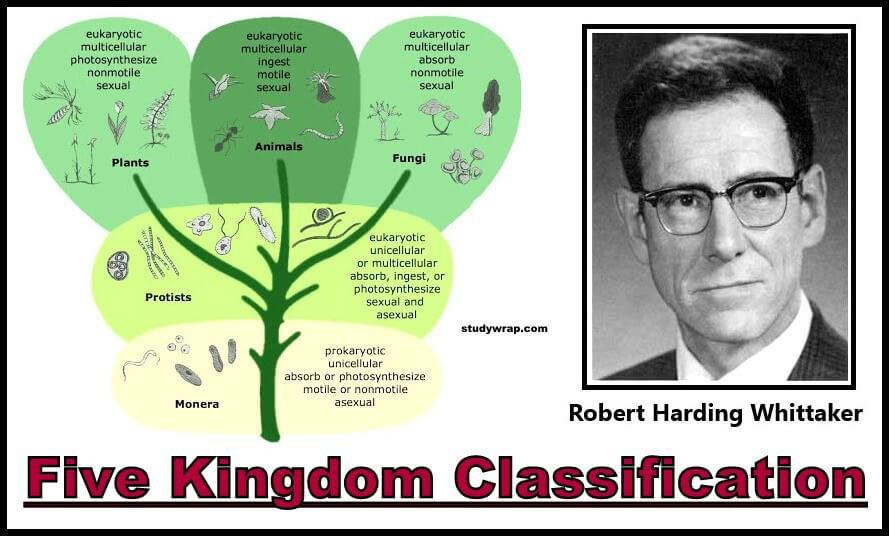
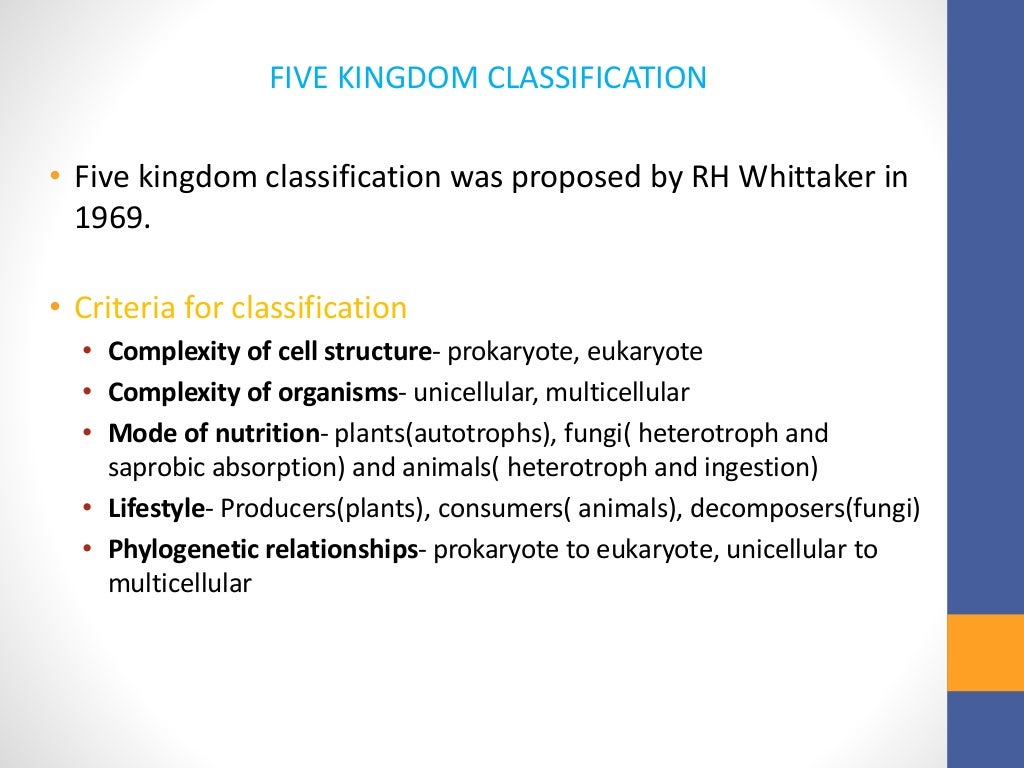
R.H. Whittaker (1969) proposed a Five Kingdom Classification. The kingdoms defined by him were named Monera, Protista, Fungi, Plantae and Animalia. The main criteria for classification used by him include Cell structure, Thallus organisation, Mode of nutrition, Reproduction and Phylogenetic relationships. Let us look at this five kingdom.
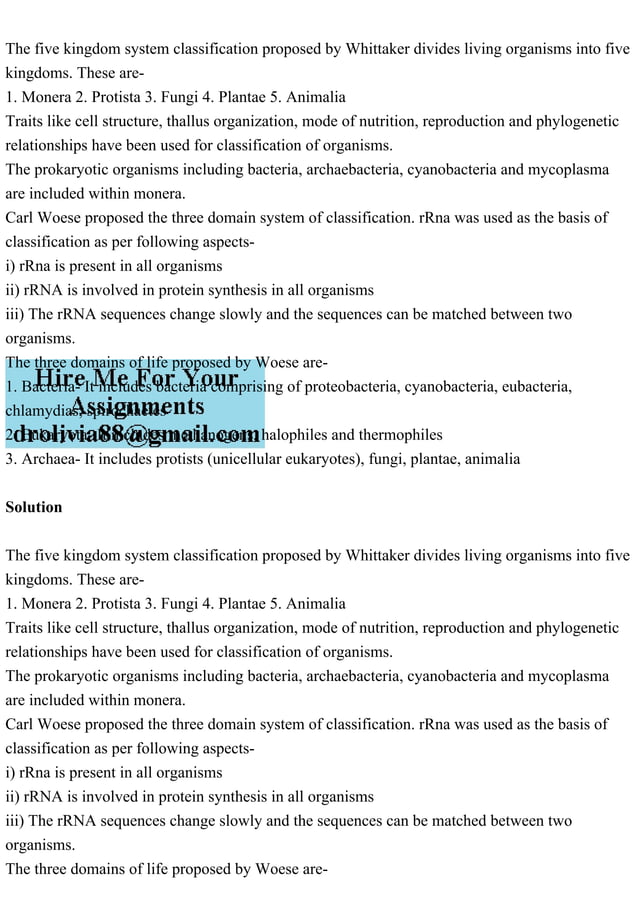
The five kingdom system classification proposed by Whittaker divides.pdf
Five Kingdom Classification R.H. Whittaker (1969) Protista Unicellular Eukaryotes Oxygenic Photosynthesis in Bacteria. with silica and made up of two thin overlapping shells. Diatoms Flashcards for NEET Biology: Biological Classification. Red tides Gonyaulax (Red dinoflagellates) The cell wall of fungi Chitin and Polysaccharides Stiff.
The five kingdom classification was proposed by a)R.H.Whittaker b)C.Linnaeus c)A.Roxberg d
Download book PDF. Evolutionary Biology. For reasons discussed below, based on recent discoveries from a variety of disciplines, it seems that Whittaker's five-kingdom system (Whittaker, 1969) is the most logical and consistent yet devised.. Five-Kingdom Classification and the Origin and Evolution of Cells. In: Dobzhansky, T., Hecht, M.
FIVE KINGDOM CLASSIFICATIONRH Whittaker
Five Kingdom Classification • In 1937, E-Chatton suggested the terms of, "Procariotique" to describe bacteria and "Eucariotique" to describe animal and plant cells. • 1967, Robert Whittaker introduced the five-kingdom classification system. • The levels of cellular organization: > prokaryotic > unicellular eukaryotic
R.H. Whittaker's Five Kingdom Classification, Monera, Protista, Fungi, Animalia, Plantae YouTube
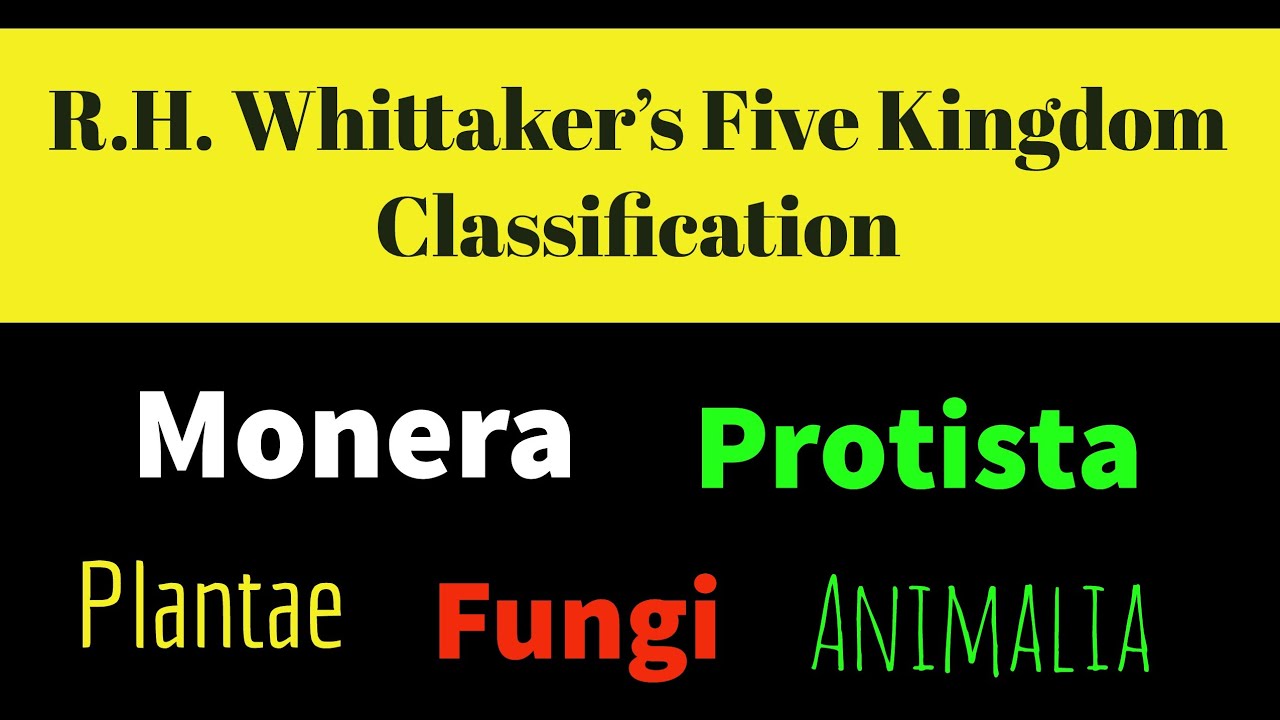
Classification is a system of organizing organisms into categories or groups based on similarities and differences. This method makes the study of a large variety of organisms manageable and systematic. The five-kingdom classification was proposed by R.H. Whittaker in 1969. This categorization was based on certain characteristics such as mode.
FIVE KINGDOM CLASSIFICATIONRH Whittaker easy and short summary Alternation of generations

In 1969, Robert H. Whittaker proposed a Five- Kingdom System of Classification, in which all organisms are placed into five kingdoms. Features of Five Kingdom System of Classification Whitaker proposed that organisms should be broadly divided into kingdoms, based on certain characters like the structure of the cell, mode of nutrition, the.
Whittaker's Five Kingdom Classification Science 2.0 Study biology, Biology facts, Science

This historical episode provides insights into important intellectual, institutional, and social changes in biology after World War II and sheds light on the impact of Cold War politics on science education and educational reforms that continue to shape the presentation of biological topics in introductory textbooks today. Robert Whittaker's five-kingdom system was a standard feature of.
The five kingdom classification was proposed by a)R.H.Whittaker b)C.Linnaeus c)A.Roxberg d
his initial foray into the classification of kingdoms. The development of Whittaker's five-kingdom system Shortly after leaving Hanford, Whittaker published a brief note in Ecology, arguing that the traditional dichotomy between plants and animals was artificial (Whittaker 1957). According to Whittaker, a better classification would recog-
Whittaker's Five Kingdom Classification Criteria, Advantages And Limitations
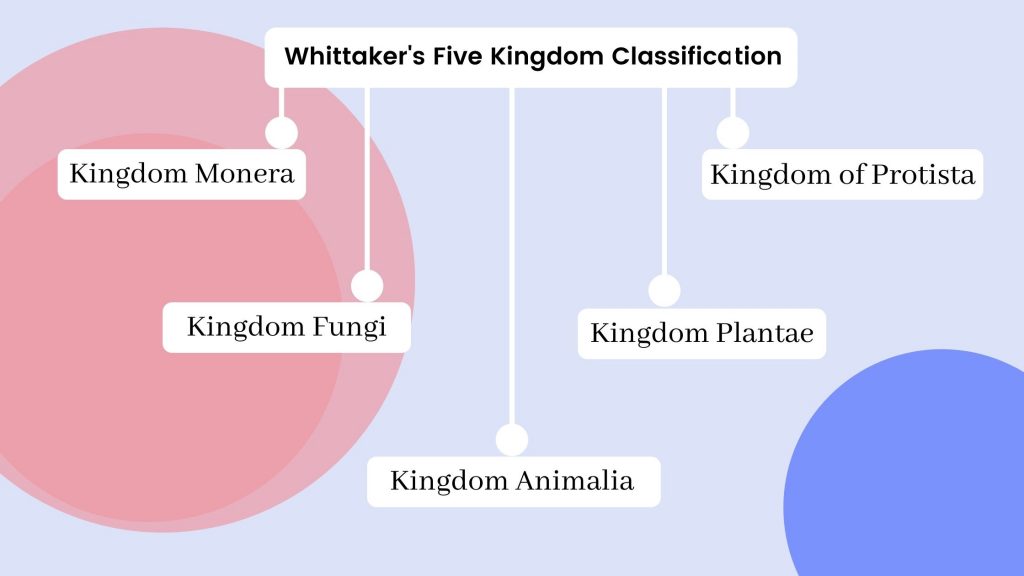
Whittaker's (1969) new system of classification into five kingdoms (Monera, Protista, Animalia, Plantae and Fungi) has made a fundamental contribution to the clarification of relationships among lower organisms. Whittaker's (1969) new system of classification into five kingdoms (Monera, Protista, Animalia, Plantae and Fungi) has made a fundamental contribution to the clarification of.
Biological Classification Whittaker’s 5 Kingdom Classification1 BSc., Zoology1st Semester

17,100. R.H. Whittaker proposed the five-kingdom classification in 1969. This classification was based upon certain characters like mode of nutrition, thallus organization, cell structure, phylogenetic relationships and reproduction. This form of kingdom classification includes five kingdoms Monera, Protista, Fungi, Plantae and Animalia.
Whittaker Five Kingdom Classification Biology Ease
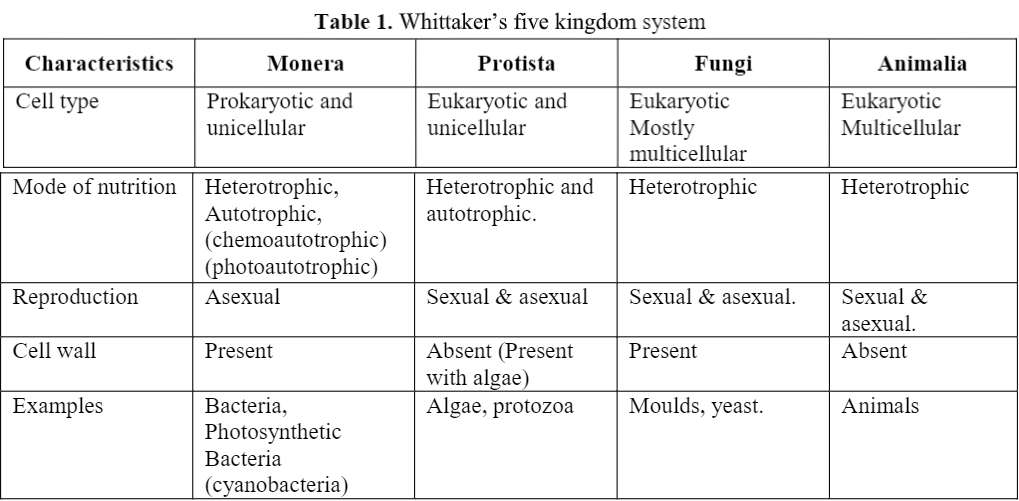
R.H. Whittaker (1969) proposed a Five Kingdom Classification. The kingdoms defined by him were named Monera, Protista, Fungi, Plantae and Animalia. The main criteria for classification used by him include cell structure, thallus organisation, mode of nutrition, reproduction and phylogenetic relationships. Table 2.1 gives a
Two To Five Kingdom Classification SystemAn Overview
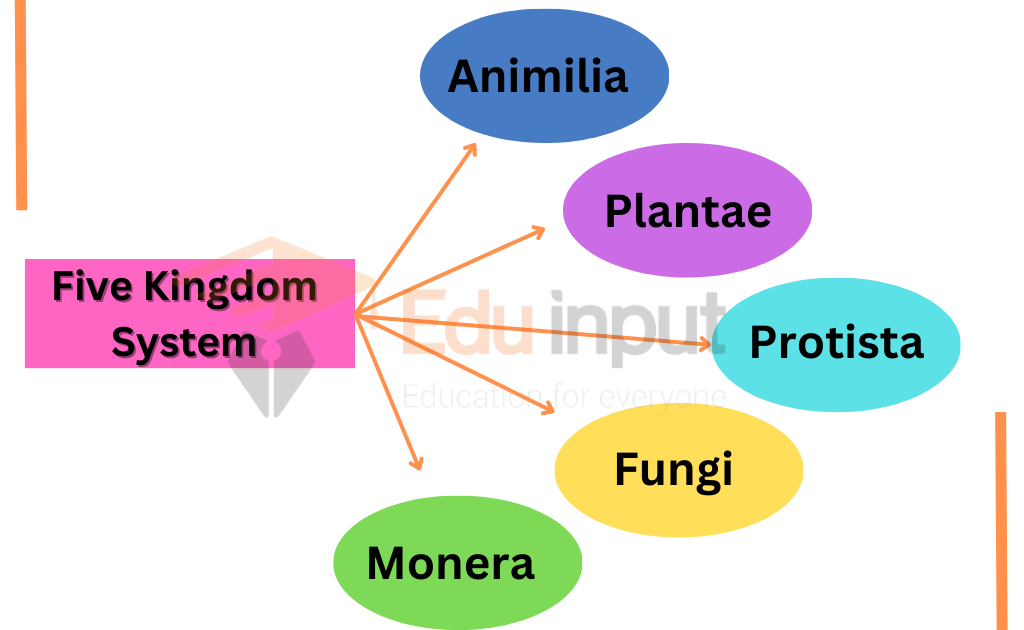
Biology. 1971. TLDR. A basic taxonomy of three kingdoms Mychota, Animalia, and Plantae is supported, where the intergrades between the latter two are treated not as defects of the classification but rather as the inevitable result of common ancestry and separation by a process of evolution. Expand.
FIVE KINGDOM CLASSIFICATIONRH Whittaker
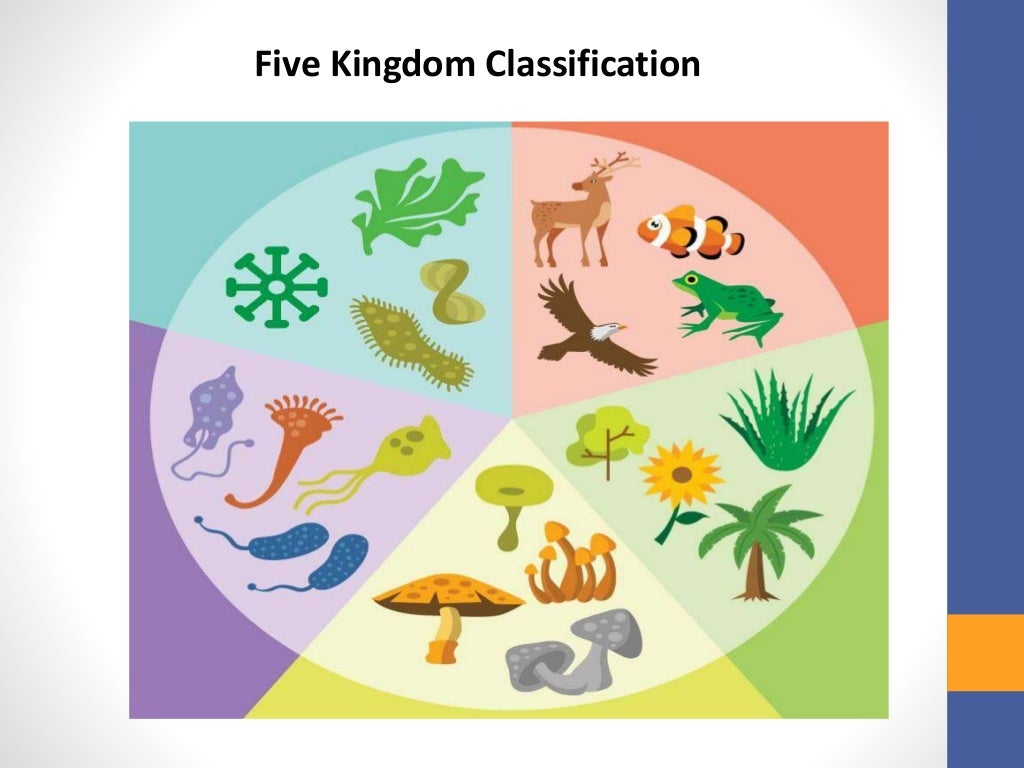
kingdom animal-plant distinction, which has outlived its usefulness, with a multikingdom classification of living organisms. For reasons discussed below, based on recent discoveries from a variety of disciplines, it seems that Whittaker's five-kingdom system (Whittaker, 1969) is the most logical and consistent yet devised.
Five Kingdom System of Classification also know as Whittaker's system of classification is

eukaryotic cells, suggesting more than three kingdoms were required. In 1969, R.H. Whittaker proposed a five-kingdom system to improve classification. This system included three kingdoms of more complex organisms based on three modes of nutrition. The Animalia ingest food, the Plantae make their own food via photosynthesis, and the
Classification of organisms Whittakers 5 kingdoms Organisms Monera
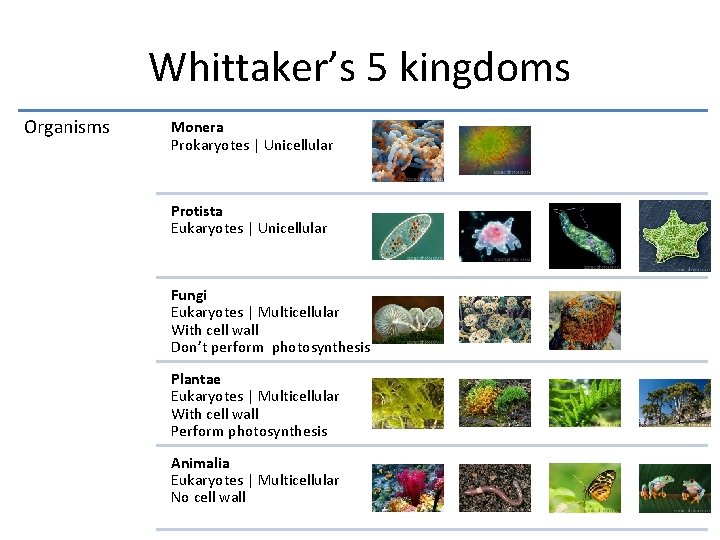
Amongst these, the Five Kingdom Classification proposed by Robert Whittaker stood out and is widely used. Whitaker proposed that organisms should be broadly divided into kingdoms, based on certain characters like the structure of the cell, mode of nutrition, the source of nutrition, interrelationship, body organization, and reproduction.
.